About Cooling Without Air Conditioning: Passive Design Lessons from Traditional Islamic Architecture

How did buildings stay cool before air conditioning?
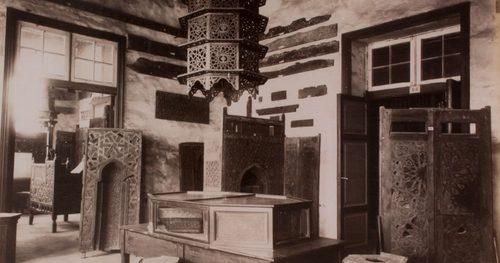
This talk explores passive cooling strategies embedded in traditional Islamic architecture and asks what they can teach us about designing more comfortable and energy-efficient buildings today. Drawing on Rofayda's PhD research and archival work at the Library, this presentation explores architectural features such as the Mashrabiya, shading, ventilation, geometry, materials, evaporative cooling and how these traditional principles can be reinterpreted through contemporary research and design.
The talk will highlight how traditional architecture represents not simply a historical aesthetic, but a body of environmental knowledge developed in response to climate, materials, craft and human comfort.
This event is part of Green Libraries Week.
Your support
The British Library is a charity. Your support helps us open up a world of knowledge and inspiration for everyone. Please consider adding a donation to your basket.
Dr Rofayda Salem
Dr Rofayda Salem is an architect, researcher, and academic specialising in sustainable building design, passive cooling, and building performance
More
She is also a British Library Visiting Postdoctoral Research Fellow for Sustainability and Environment. She holds a PhD in Architecture and Environmental Design from the University of Westminster, where her doctoral research investigated how principles of the traditional Mashrabiya could be reinterpreted as a contemporary passive cooling system.
Her research combines traditional architectural knowledge with environmental analysis, computational simulation, material experimentation and full-scale testing. She has experience teaching environmental design and building performance simulation at undergraduate and postgraduate level and has presented her research internationally.
You might also like
Pepperpots and Provision Grounds
A recipe zine-making workshop that unearths food histories in Britain’s former Caribbean colonies within the Library’s archival collections.

Writing Climate Fiction That Changes Minds
Join us to explore how can we communicate climate change in a way that inspires joyful action rather than climate anxiety.
National Emergency Briefing – Community Screening
Screening followed by a Q&A.