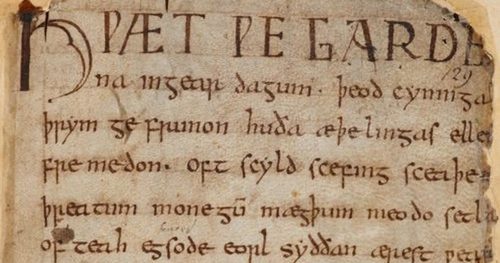
About Online Course: Discovering Medieval Manuscripts
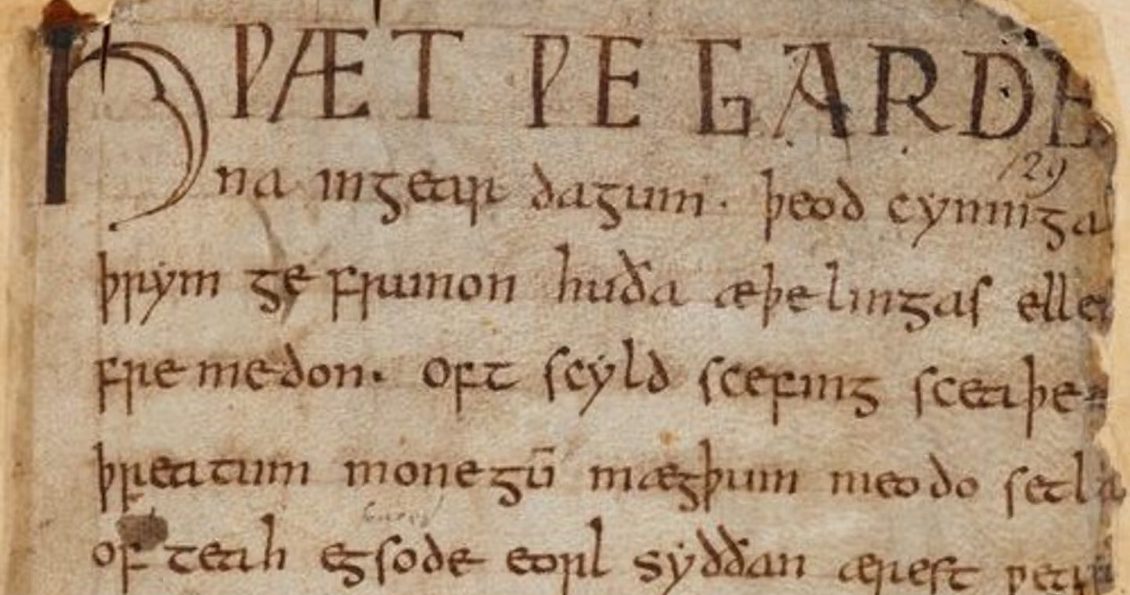
Medieval manuscripts are touchstones of human history: priceless not only for the texts they contain but for the stories they accrue through time. Today, a few of these manuscripts are well known; others are hidden gems; many more linger only as ghosts. Each has a story to tell.
Through the six weeks of this online course we invite you to meet some of the treasures of the British Library’s medieval manuscript collection, stretching from the first inklings of literacy in England through to the great flourishings of later medieval written culture. We’ll consider the unique nature of manuscript production, the many hands and materials involved in the creation of a manuscript, and the long afterlives – and sometimes deaths – that follow. We’ll delve into the manuscripts’ visual cues and mise-en-page, the interplay of word and image, the stylistic choices made by scribes and illuminators. And we’ll explore the use of text and language on the manuscript page, reading works written in both Old and Middle English, as well as Latin. Along the way, we’ll encounter miracles and monsters, marauding Vikings and courtly lovers, and much more.
No prior knowledge is needed and translations will be provided as required.
This course takes place on Microsoft Teams. The joining information will be emailed to you in advance of each session. Sessions are recorded and uploaded to the Course Padlet, and can be watched back at your leisure.
Access to the Course Padlet is available until Tuesday 17 November 2026.
Your support
The British Library is a charity. Your support helps us open up a world of knowledge and inspiration for everyone. Please consider adding a donation to your basket.
Dr Victoria Symons
Dr Victoria Symons is a medievalist specialising in Old English literature, medical practices and runic writing.
More
She holds an honorary lectureship at University College London, having taught Old and Middle English language and literature for more than a decade at a variety of institutions. She is the author and editor of books including The Tale of Beowulf (2022), Runes and Roman Letters in Anglo-Saxon Manuscripts (2017) and Stasis in the Medieval West (2017). Her wider publications include numerous articles, chapters, translations and blogposts for both academic and general audiences, with notable ventures ranging from co-editing The Riddle Ages blog to working on a Beowulf-inspired videogame project. Although her first love will always be runes, her current research centres on childbirth and domestic remedies in both Old and Middle English contexts.
Dr Mary Wellesley
Dr Mary Wellesley is an Associate Member of the English Faculty at the University of Oxford.
More
She has worked in the British Library’s department of Ancient, Medieval and Early Modern Manuscripts and also held a Research Affiliateship at the Library. Her book, Hidden Hands: the Lives of Manuscripts and Their Makers was published in October 2021. It was chosen as one of the history books of the year by both The Times and BBC History Magazine. Mary is passionate about communicating medieval history to the widest possible audience. Alongside her academic work, she writes widely – her work has appeared in the Sunday Times, The Telegraph, The London Review of Books, The New York Review of Books and The Times Literary Supplement, amongst others. She is also the co-host of two podcast series made by the London Review of Books, ‘Encounters with Medieval Women’ and ‘Medieval Beginnings’. She spent 2017 developing the medieval section of the British Library’s Discovering Literature online resource, which showcases the Library’s medieval English literary collections.
Programme
Week 1: What is a manuscript?
Tutor: Dr Mary Wellesley
Palimpsests, Lacunae, Quires… the world of medieval manuscripts can seem strange and baffling at first, but in this first session we will take you through how a manuscript was made – from the processing of parchment, to their construction, writing and decoration. You’ll see how special these objects are as collections of human stories – the work of countless individuals working together. We’ll also think about the lives of manuscripts after they were made and how they bear the traces of the many people who have handled and mishandled them in their storied lives.
Week 2: Origins
Tutor: Dr Victoria Symons
Developing from Week 1, we’ll be looking more closely at the origins of manuscripts: both their own production and the inception of their long and storied lives and afterlives. We’ll take as our focal point the Lindisfarne Gospels, one of the greatest masterpieces of early medieval Northumbria. The names of those associated with its production, Eadfrith, Ethelwald and Billfrith, as well as the intrepid Aldred who took it upon himself to gloss the manuscript and – in so doing – create the first translation of the Gospels into English, give a flavour of the collaboration and innovations required to create such a work. Produced in the early 8th century and soon at risk of Viking marauders, the Lindisfarne Gospels demonstrates above all the enduring power and great allure of the written word.
Week 3: Hunting for Women
Tutor: Dr Mary Wellesley
There is a common misconception that medieval manuscripts were all made by monks, but that isn’t the case. In this session we will look at the role of women as authors, scribes, illuminators, patrons and readers. What becomes clear is that women were involved in the production and use of manuscripts at every level, but the evidence isn’t always immediately obvious. We find the work of women hidden in pieces of secret code, in tiny notes almost obscured in a page gutter and hinted at in specific grammatical constructions that indicate female readers and scribes.
Week 4: Beowulf
Tutor: Dr Victoria Symons
Beowulf – both the poem and the sole manuscript that preserves it – is by far the most famous literary survival of early medieval England. The Nowell Codex, to give the manuscript its official title, is a work of monsters and marvels, written in both Old English and Latin, prose and poetry, with a smattering of images, scattered runes, and adventures aplenty. Beowulf itself is the longest surviving Old English poem and our only example of extended secular heroic narrative in the vernacular. Alongside it, the manuscript includes The Marvels of the East, with rich descriptions and lavish illustrations of the weird and wonderful creatures encountered by travellers, stories of both St Christopher and Alexander the Great, and a poetic retelling of Judith’s encounter with Holofernes. In this session we’ll get to know the Beowulf manuscript, its scribes, and some of the many stories it tells.
Week 5: Chaucer
Tutor: Dr Mary Wellesley
Geoffrey Chaucer is one of English Literature’s greatest figures – an author who presented us a vision of late medieval England in all its riot, tragedy, hope and colour. He translated works of philosophy, wrote dream visions, saints’ lives, a scientific treatise and an excellent story about people sticking their bums out of a window. The manuscripts of Chaucer’s work are just as fascinating and complex. We often imagine that literary manuscripts offer us direct access to the minds of authors, but no manuscript survives in Chaucer’s own hand. In fact, no manuscript survives that dates from his own lifetime. In studying them, we gain a new appreciation of the work of later scribes and readers and get a captivating glimpse of what Chaucer meant to his earliest audiences.
Week 6: Endings
Tutor: Dr Victoria Symons
As our course draws to a close, our final session considers the endings of manuscripts. The written word has always been vulnerable to destruction, whether through loss, or fire, or the vagaries of changing tastes. Charms warding against theft and records of ransoms paid for the return of books attest to some of the risks feared by the owners of these works, while moth damage and singed pages remind us of other dangers. We’ll end our course with the fates that some of these manuscripts meet, the traces left by those that didn’t stand the tests of time, and a few surprising survivals.
Course dates and times
This course takes place across 6 weeks.
- Tuesday 8 September, 12.30 – 13.30
- Tuesday 15 September, 12.30 – 13.30
- Tuesday 22 September, 12.30 – 13.30
- Tuesday 29 September, 12.30 – 13.30
- Tuesday 6 October, 12.30 – 13.30
- Tuesday 13 October, 12.30 – 13.30
Please note this course takes place online via Microsoft Teams. The joining information will be emailed to you in advance of each session. Sessions are recorded and uploaded to the Course Padlet, and can be watched back at your leisure. Access to the Course Padlet is available until Tuesday 17 November 2026.
Prior Experience and preparation
No prior knowledge or preparation is needed and translations will be provided as required.
Concessions
There are a range of concessions available. These include discounts for Members, Young Persons (16–25s) and visitors on Universal/Pension Credit. Press Book Now to see the full range of concessions for this event.
Want to hear more about events like this?
Sign up to our emails to be the first to hear about upcoming events and exhibitions at the Library.
You might also like
Writing Crime Comedy Masterclass
Learn how to craft your crime comedy.

Art workshops for people who are blind and partially sighted
Join us for a monthly art workshop designed for blind and partially sighted visitors.
Plotting the Mystery: Writing Crime Fiction
Learn the secrets of writing crime fiction.