About Healing, Religion, and Politics in Medieval China

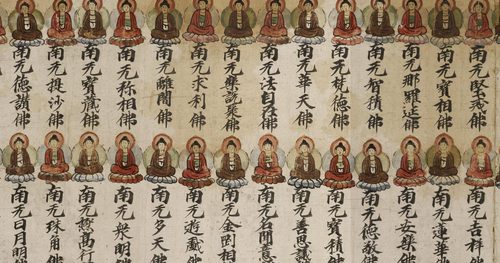
In the spring of 902 CE, a governor in northwest China tried to end an epidemic that had lasted for three years. He ordered monks and nuns at more than a dozen Buddhist temples to perform rituals of chanting and confession twice a month. By chance, both the governor's order and the Buddhist community's response survived among the Dunhuang manuscripts, a remarkable collection of documents discovered in 1900.
These manuscripts also contain several ritual texts used by Buddhist monks to help communities affected by epidemics in the ninth and tenth centuries. Drawing on these sources, Professor Teiser explores how government officials and Buddhist religious leaders understood the causes of disease and what they believed could bring relief.
Some epidemics were seen as the result of poor leadership, while others were linked to collective karma, actions from previous lives, harmful spirits, or wider disasters. To combat illness, people donated to temples, hoping the religious merit generated would benefit the whole community. Other rituals sought the protection of Buddhist deities, asked them to drive away malevolent forces, or symbolically banished disease and the spirits associated with it to distant, uninhabited places.
The bar in the Knowledge Centre will be open from 18.00. There will be a drinks reception from 19.30 – 20.00.
This lecture is supported by the Sir Percival David Foundation of Chinese Art.
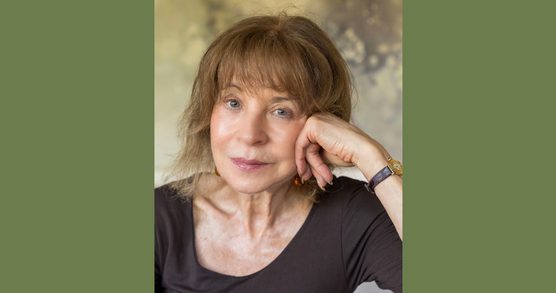
Stephen F. Teiser
Stephen F. Teiser is D. T. Suzuki Professor in Buddhist Studies and Professor of Religion, Emeritus, at Princeton University (1988 – 2026).

More
His scholarship includes the philological study of canonical Buddhist scripture and Chinese religious texts, the codicological and liturgical features of excavated manuscripts, and the art and ritual of Buddhist cave shrines from India to China. His books include The Ghost Festival in Medieval China (1988), “The Scripture on the Ten Kings” and the Making of Purgatory in Medieval Chinese Buddhism (1994), Reinventing the Wheel: Paintings of Rebirth in Medieval Buddhist Temples (2006), an English translation of HAO Chunwen’s Dunhuang Manuscripts: An Introduction to Texts from the Silk Road (2020), and Yili yu fojiao yanjiu 仪礼与佛教研究 (Ritual and the Study of Buddhism, 2022). He has edited numerous books and collaborates with scholars in Asia, Europe, the UK, and North America.
International Dunhuang Programme's Lecture Series
The International Dunhuang Programme's Lecture Series invites audiences to dive into the rich history and cultures of the Eastern Silk Roads through engaging talks and new research. By bringing different disciplines together – from archaeology and history to art, religion and manuscripts – the series reflects the IDP's commitment to fostering dialogue and sharing the latest discoveries and fascinating developments in the field. For more information about the Institute and our collections, visit our webpage or contact idp@bl.uk.